The word of God is such a trip! Passover was the first Jewish feast that opened the wardrobe door for me into a fascinating “kingdom of Narnia” waiting on the other side. The feasts of the Hebrews are sooooo darn …well, enrapturing! They paint a portrait of such amazing detail about our Savior, in a parable sort of way, that’s hidden in plain sight. The feasts are a living picture of God’s beautiful, hospitable plan for His people (Jew and Christian) – each with a humble beginning, a kind of boring ritual middle part, and then an <angel chorus> let there be light – gleaming fulfilment in God’s kingdom. Each is a dim reflection, a copy and shadow of things to come, given to us by a God who, like those feasts, was and is and is to come. We Christians are grafted in with our Jewish brothers and sisters, and they with us, as two parts of a whole. We come together at this Passover feast for a full and rich understanding of our Creator and His amazing plan of salvation.
Christian, come celebrate Jesus the Christ this Easter in a way you never imagined. And Jewish person, come dine at the table of the Lord, the Last Supper, and drink the cup, and break the bread, and comprehend the beautiful covenant He has made with us both.
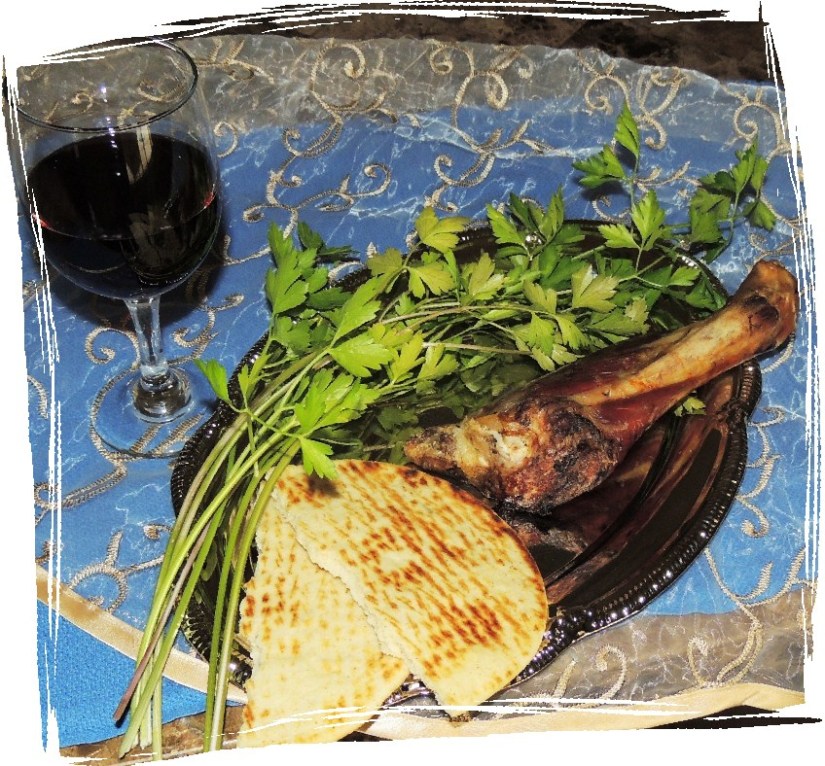
“I [Jesus] will not drink of this fruit of the vine from now on until that day when I drink it new with you in My Father’s kingdom.” Matthew 26:29
We never know what an act of hospitality will mean in the grand scheme of things. All we know is that God expects us to do it. He has set Himself up as our example and He promises we will be blessed if we show hospitality out of love for Him. Moses, who was on the run from the Egyptians for killing one of the task masters over his cruel treatment of a Hebrew slave (which were the people of Moses), encountered the incredible hospitality of Reuel (Jethro), a kenite shepherd and the priest of Midian. And because of Jethro’s generosity to open his home, Moses was kept safe from his enemies, and was free to hear from and commune with God, and in the process, found his purpose and calling in life. (Exodus 2)
God said to Moses from the burning bush: “I will send you to Pharaoh that you may bring My people, the children of Israel, out of Egypt.” (Exodus 3:10)
Moses went to Pharaoh and beseeched him to “Let my people go!” But Pharaoh would not, not until God sent plagues, and a final plague that would take the life of every first born male in the land.
To be spared this plague, the people of God were instructed to take a lamb from their herds, a year old male without flaw or defect, on the 10th day of the month Nisan and keep it until the 14th day Nisan. This gave them time to inspect the lamb to make sure he had no flaws, and it also gave them time to get to know their lamb and become personally attached so that he would not be just a lamb, but their lamb.
The morning before the Passover, the Jewish people were instructed not to use leaven (yeast) in the bread they made that night, perhaps because leavened dough takes time to rise and the people would not have time for that. The Hebrews were also instructed to slaughter their lamb at twilight, and to use the blood from that lamb to paint the door frames of their homes. The innocent little lamb became their substitute for the death sentence (final plague) to “pass over” them. They were to roast their lamb over fire, eat it all that night, and burn up all the leftovers. The meal also included bitter herbs, which God intended to be used by the children of all future generations to ask the questions that would enable the Passover story to be told and retold and practiced from generation to generation, until the feast would be fulfilled by God. (God’s great plan has been to release us all who are slaves of sin, and brings us all into His rich kingdom, flowing with milk and honey).
The spirit of death indeed passed over God’s people that night, but not the Egyptians, and in his grief Pharaoh finally let God’s people go.
Did you know … that Passover has been observed by the Jews continuously for the last 3,500 years? It is the oldest observed feast in existence.
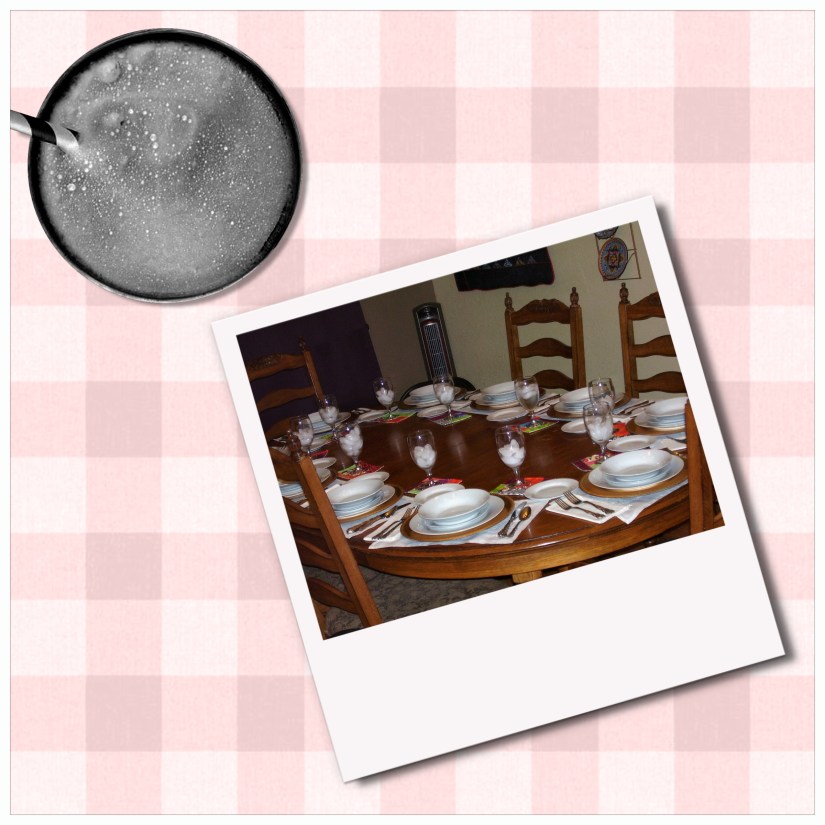
This is what a modern Jewish Seder looks like. It tells a story going backwards and forwards that I am blessed to share with you.
.
JEWISH SEDER TRADITIONS
Because leaven is used as a metaphor for sin in the scriptures, Jewish homes are thoroughly scrubbed (kind of like a spring cleaning), to rid them of every single tiny particle of leaven that might be hiding in the cracks and crevices, the bottoms of pants pockets, or lingering in bowls, pans, or on the kitchen utensils before Passover.
We can all observe this practice symbolically by taking to heart the words of the psalmist, king David:
“Search me, O God, and know my heart; try me, and know my anxieties; And see if there is any wicked way in me, and lead me in the way everlasting.” (Psalm 139:23-24)
Passover begins at twilight and often lasts until midnight or longer. The meal begins with the lighting of the candles on the table, and the meal blessing is given by the woman of the house:
We, who have metaphorically been sitting in darkness of God’s great plan can imagine a candle being lit in our hearts tonight as we study the Jewish Seder and heed the words of Isaiah 9:2:
“The people who sat in darkness have seen a great light, and upon those who sat in the region and shadow of death Light has dawned.” (Matthew 4:16)
As the woman of the house, I offer a prayer that God will speak to your heart and bless the words that I’ve placed here as food for your soul.
.
In Hebrew tradition, the youngest person is to sit to the right side of the leader at the table, and to his left is the guest of honor.
AT THE LAST SUPPER: It is traditionally believed that John, the “disciple whom Jesus loved,” the younger son of Zebedee, one of the pair that Jesus called Boanerges, or “Sons of Thunder” was the youngest disciple. Perhaps this is what triggered the discussion (arguement) between James and John and the other disciples, who would sit on His right and left in the kingdom of heaven (Mark 10:35-45 and Matthew 20:20-28). If John would get to sit at Jesus’ right, of course their mother wished that her other son James would get to sit on His left. And of course this caused a hue and cry with the other disciples (Luke 22:24). Jesus lovingly rebuked them (and remained discreet about the seating arrangements of His kingdom), except to say…
“You know that the rulers of the Gentiles lord it over them, and those who are great exercise authority over them. Yet it shall not be so among you; but whoever desires to become great among you, let him be your servant. And whoever desires to be first among you, let him be your slave – just as the Son of Man did not come to be served, but to serve, and to give His life a ransom for many.” (Matthew 20:26-28)
“I bestow upon you a kingdom, just as My Father bestowed one upon Me, that you may eat and drink at My table in My kingdom, and sit on thrones judging the twelve tribes of Israel.” (Luke 22:29-30)

THE FIRST OF FOUR CUPS OF WINE (Exodus 6:6-7): The meal begins with a cup of wine – the first cup… “I will bring you out,” says the Lord. The father pours the first cup and asks everyone to stand, and then he raises it to heaven and prays the prayer of sanctification (or Kiddush).
THE WASHING: One of the family members brings water and towels to everyone, that they may all be cleansed to handle the food.
Bodily cleansing vs spiritual cleansing: You’ve heard it said that cleanliness is next to godliness. Clean hands prevent the spread of disease, yes, but the Pharisees of Jesus day had become very legalistic about “the washing.” Jesus rebuked them in Mark 7 after His disciples were caught eating bread with unwashed hands. Jesus distinguished rituals and doctrine from true faith by saying, “Whatever enters a man from outside cannot defile him, because it enters his stomach and not his heart…what comes out of a man…evil things overflowing from his heart, those defile a man” (Mark 7:18-23). In other words, a pure heart is better than clean hands. That is the goal of our Savior – to give us a clean heart.
THE GREEN VEGETABLE: A green vegetable is dipped into salt water and eaten. It symbolizes that Passover happens in the spring, and the salt water represents the tears of the pain and suffering of slavery.
God’s word says ( in Genesis 8:21; Proverbs 22:15; Psalm 51:5 and Ephesians 2:1-3) that we are born with a sin nature. I wonder, does that grieve us? Because of our natural bent to sin we prove that we are slaves of sin. It is a commonly preached doctrin that humanity was made a slave of sin in the garden of Eden. For many of us it’s a tearful struggle to truly overcome the powerful temptations that constantly barage us – and to have the strength to stand up against Satan’s flaming arrows that are incessantly fired at us. God sees our tears.
THE MATZAH BROKEN: There are 3 pieces of Matzah (unleavened bread) in a linen bag on the table. In a traditional Seder the head of the house removes the center piece (afikomen), breaks it in half, puts half back and wraps the other half of the broken piece in a napkin and hides it somewhere in the house.
Afikomen is a Greek word (the only Greek word in the entire Passover) and simply means – I came. Isn’t that interesting? It was not part of the observance in Jesus’ day. It was added to the Seder by the Rabbis later; and it represents the lamb, and tradition holds that it must be eaten.
AT THE LAST SUPPER: Jesus broke bread with his disciples and said it was His body that was broken for us. Matzah is unleavened (leaven represents sin) cracker-type bread. It is pierced with a fork and has stripes on both sides from the grill that it is cooked on. Scripture tells us (in Isaiah 53:5) “He [Jesus] was wounded for our transgressions, bruised for our iniquities, the chastisement for our peace was upon Him, and by His stripes we are healed.”
FOUR QUESTIONS: In Exodus 12:26 the children are to ask what is meant by this service. And so the youngest at the table (and often reclining on the leader) gets to ask the traditional questions that will tell the Exodus story: Why is this night different from all other nights?
- On all other nights, we eat either leavened or unleavened bread; why on this night do we eat only unleavened bread?
- On all other nights, we eat all kinds of herbs, but why on this night do we eat only bitter herbs?
- On all other nights, we do not dip even once, but why on this night do we dip twice?
- On all other nights we eat either sitting or reclining, but why on this night do we eat reclining?
AT THE LAST SUPPER: “Now there was leaning on Jesus’ bosom one of the His disciples, whom Jesus loved” (John 13:23). This seems to confirm that John was the youngest, and sitting to the right of Jesus at the Last Supper.
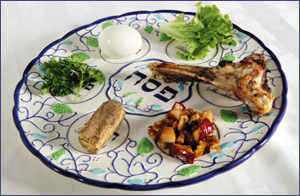
THE SECOND CUP…I will rescue you from their bondage. A second cup of wine is poured and the questions are answered with a long and detailed story of the history of Israel, from Abraham’s calling out of Ur all the way through to Moses and the 10 Commandments.
Each plague is described and a little wine is poured out for each.
The Passover Plate is part of the telling of this story. Before the second cup is consumed Psalm 113-118 (which is the Hallel – a word that means praise) is spoken.
It is believed that the Levites chanted this Hallel while the Passover lambs were being sacrificed.
THE MATZAH DIPPED: After a second “ceremonial” hand washing, the top Matzah and what is left of the middle afikomen are broken up and given to each person at the table. Each person dips the bread into the horseradish and haroset (a sweet apple concoction) and then eats it. It symbolizes the sweetness of God’s redemption from the bitterness of slavery. There should be enough horseradish on the bread to cause the person eating to shed tears.
AT THE LAST SUPPER: “[Jesus] rose from supper and laid aside His garments, took a towel and girded Himself. After that, He poured water into a basin and began to wash the disciples’ feet, and to wipe them with the towel with which He was girded” (John 13:4-5). Jesus is the sweetness and the one who washes us. “And Judas, who had dipped with Jesus, went off to his task, as a slave of sin.”
THE MEAL: At this point the lamb is served, with bitter herbs and Matzah. Modern meals include fish, matzah ball soup, glazed chicken, stuffing, potato kugel, honeyed carrots, stewed fruit, and sponge cake. (This is the menu I fervently desire to serve my guests for Easter Dinner at least one Easter in our lives).
AT THE LAST SUPPER: “With fervent desire I have desired to eat this Passover with you before I suffer; for I say to you, I will no longer eat of it until it is fulfilled in the kingdom of God.” (Luke 22:15-16)
This just melts my heart, that it was Jesus’ fervent desire to eat this one last meal on earth with His closest friends. Perhaps it was the sweetness that would get Him through the bitterness of the Cross. The taste of which would linger on His tongue as He was bruised for our iniquity. It should linger in our minds until that day when we can savor it WITH HIM, in His kingdom.
It simply astounds me how Jesus was the fulfillment of so much history, but how he is the pivoting point in the chiastic structure of scripture that also shows us our future. These feasts are a picture of what has been, and what is coming, so clearly illustrated in this verse. Jesus celebrated with His friends a meal that had been part of all their lives for all their lives, and part of their culture for as long as people had lived on the earth. And He tells us that it has yet to be ultimately fulfilled in heaven. This very feast, this very meal. Oh my … just very cool!
THE MATZAH FOUND: After supper the kids are excused to go look for the hidden piece of afikomen. Like an Easter Egg Hunt in a way. Whoever finds it is rewarded, and the piece is broken up and shared by all.
THE LAST SUPPER: “And as they were eating, Jesus took bread, blessed and broke it, and gave it to the disciples and said, ‘Take, eat; this is my body” (Matthew 26:26) “which is given for you; do this in remembrance of Me.” (Luke 22:19)
This is the communion bread, the bread of the covenant, and the Holy Communion that He instituted with us His church, that we all practice to this day! And may we continue to practice this ritual, as our Hebrew brothers and sisters practice Passover/unleavened bread, until the day we are seated at His table eating it with HIM! 🍴🍪🍷
THE THIRD CUP…the cup of redemption, is poured and sipped, and one of the children goes to the front door to see if Elijah the prophet is there to welcome him in (Mal.4:5).
AT THE LAST SUPPER: Jesus presented “the cup after supper” (Luke 22:20). “This cup is the new covenant in My blood, which is shed for you.” I will redeem you with an outstretched arm. This is the cup that Jesus used to institute the Holy Communion, which He asked that we keep in remembrance of Him.
In Matthew 17:10 the disciples asked Jesus, “Why do the scribes say Elijah must come first?” Jesus said that Elijah has come (He was referring to John the Baptist – Mal.4:5-6; Luke 1:17), and is coming to restore all things. How curious that Elijah and Moses appeared with Jesus at the transfiguration, since the first Passover came through Moses and during Passover feast the Jews look for Elijah. The name Elijah means Jehovah is God.
THE FOURTH CUP…I will take you as My people. The cup of acceptance or praise is poured and drank.
AT THE LAST SUPPER: Jesus did not sip of this cup. “Take this and divide it among yourselves; for I say to you, I will not drink of the fruit of the vine until the kingdom of God comes.” (Luke 22:17) “I will not drink of this fruit of the vine from now on until that day when I drink it new with you in My Father’s kingdom.” (Matthew 26:29)
CLOSING HYMN: The Seder ends with the singing of the last part of the Hallel (Psalm 115-118).
THE LAST SUPPER: “And when they had sung a hymn, they went out to the Mount of Olives.” (Matthew 26:30)
*Much of the information for the Jewish Seder Traditions came from: The Feasts of the Lord, God’s Prophetic Calendar from Calvary to the Kingdom, By Kevin Howard and Marvin Rosenthal
.
WOW! Is it a coincidence that Jesus and his disciples sang, “The stone that the builders rejected has become the chief cornerstone?” Psalm 118:22
Remember the leaven that is purged from all Jewish homes before Passover? Paul, a former Jewish priest said, “Therefore purge out the old leaven, that you may be a new lump, since you truly are unleavened. For indeed Christ our Passover, was sacrificed for us. Therefore let us keep the feast, not with old leaven, nor with the leaven of malice and wickedness, but with the unleavened bread of sincerity and truth” (1 Corinthians 5:7-8) which connects directly to the ancient Passover practice of removing all leaven from Jewish homes.
Is it a coincidence that Jesus was perfect, without sin, and that he was crucified on a cross at the exact time as the Passover lambs were being slaughtered and prepared?
Is it a coincidence that fathers break and hide the middle piece of unleavened bread during the Feast of Unleavened Bread, in the exact timeframe when Jesus was taken from the cross and buried in a tomb?
John the Baptist (the New Testament version of Elijah) called Jesus, “the Lamb of God who takes away the sin of the world.” (John 1:29-30).
John, the apostle, who reclined on Jesus at the Last Supper definitely believed Jesus to be the Passover Lamb, referring to him as such 27 times in the book of Revelation.
And Simon (Cephas), whom Jesus renamed Peter, for on the rock (the New Testiment translation of Petra – where the name Peter comes from) He would build His church, said “we were not redeemed with corruptible things, like silver or gold, from aimless conduct received by tradition from our fathers, but the precious blood of Christ, as a lamb without blemish and without spot.”
And Philip hearing the Ethiopian reading Isaiah the prophet, asked if he knew what he was reading when he read “He was led as a sheep to the slaughter, and as a lamb before it shearer is silent…” and beginning at this scripture, Philip preached Jesus to him.”
Jesus, it says in Hebrews 9:28, was offered once to bear the sins of many. He was without spot or blemish (Hebrews 9:14).
Jesus our Passover (Rev. 5:9), made atonement for our sins at His death, and as our High Priest forever went and sprinkled that blood on the mercy seat in heaven (Lev. 16:3, 14; Rom. 5:9,10).
When Jesus ascended to heaven forty days after Passover (see my Bible study blog post for Firstfruits), He sent the Holy Spirit back for us, as promised, (see my Bible study blog post for Pentecost) to live in us when we accept Him as Savior and make Him OUR Lamb, as a deposit guaranteeing our inheritance (2 Cor. 1:22; Eph. 1:13-14; 1 Pet.1:3-5; Rev. 5:6).
The Holy Spirit invisibly seals us (marks us) on the day we believe. God knows whose are His (2 Tim. 2:19), because we have His Spirit inside of us to mark us.
Marks in Scripture:
“Do not come near anyone who has the mark” (Eze. 9:6). In Genesis 4:15 God placed a mark on Cain, lest anyone finding him should kill him for what he did to his brother. The mark protected Cain, just like the Passover blood protected the Israelites.
And just as God saved his people Israel from the plague of death in Egypt, Ezekiel tells us of a man dressed in linen with a writer’s horn at his side (Eze. 9:2,11) who will “Go through the midst of Jerusalem and put a mark on the foreheads of the men who sigh and cry over all the abominations that are done within it” This seal will protect them from the one whose job it is to destroy everything wicked.
This part of Ezekiel (9:3) sounds very much like what Revelation tells of a warrior/angel who places a seal on the servants of God, of all the tribes of the children of Israel. (Could this be an application of the blood atonement reserved for God’s chosen people, His elect?). This seal is marked on their foreheads (Rev. 7:1-8; 14:1) (akin perhaps to the phylacteries of the original priests (Exodus 28:38; Exodus 13:16; Deut. 6:8).
These elect are the firstfruits to God (Revelation 14:4).
After that remnant of Israel are sealed/marked, then Revelation says we are all gathered together, of every nation, tribe, people, and tongue, and we shall all worship at the throne of God with palm branches in our hands (Rev. 7:9-12 Palm Sunday in heaven, or likely the Palms we shall bring for our Sukkah’s – which you can read about in my Feast of Booths blog post); for death shall have no dominion over us (John 6:54, 57, 58; Rom. 6:9-11).
Now this one should give you goosebumps, if you don’t already have them … a footnote in my Bible (New King James Version Spirit Filled Life Bible, Thomas Nelson Publisher) for Ezekiel 9:4 says, “the Hebrew word for “mark” is taw, the final letter of the Hebrew alphabet, which in the ancient script looked like an “X” or a cross.” A CROSS, really? Is that amazing? Rev. 22:13 says that Jesus is the Alpha and Omega, the Beginning and the End. What the disciples thought was the end of their Messiah, was just the beginning of a new testament, with an amazing end. What were Jesus’s last words as He gave up His last breath on that cross? “It is finished!” Therefore, He who began a good work in us will see it on to completion (Romans 9:28 Philippians 1:6).
Of course Satan, ever attempting to counterfeit God, will try to force his mark on people (Rev. 13:16). He masquerades as an angel of light. Beware and be watchful. His mark will be a requisite for anything to be bought or sold. Oh how I desire to either be with Jesus by then, or be completely self-sufficient and off the grid – and content with such things as I have, and part of a body of believers who takes care of each other (Acts 4:32). For those will be terrible times.
In Revelation 22:4 it says that we who have the Spirit shall all see God’s face, and the Lamb, and His name shall be on our foreheads. Amen. Christ, our Passover and the I AM, is the Author and Finisher of our faith (Heb.12:2).
“But God, who is rich in mercy, because of His great love with which He loved us, even when we were dead in trespasses, made us alive together with Christ…and raised us up together, and made us sit together in the heavenly places in Christ Jesus.” Ephesians 2:4-6







 mrshlovesjesus